In-situ Stress Relieving (Heat Treatment)
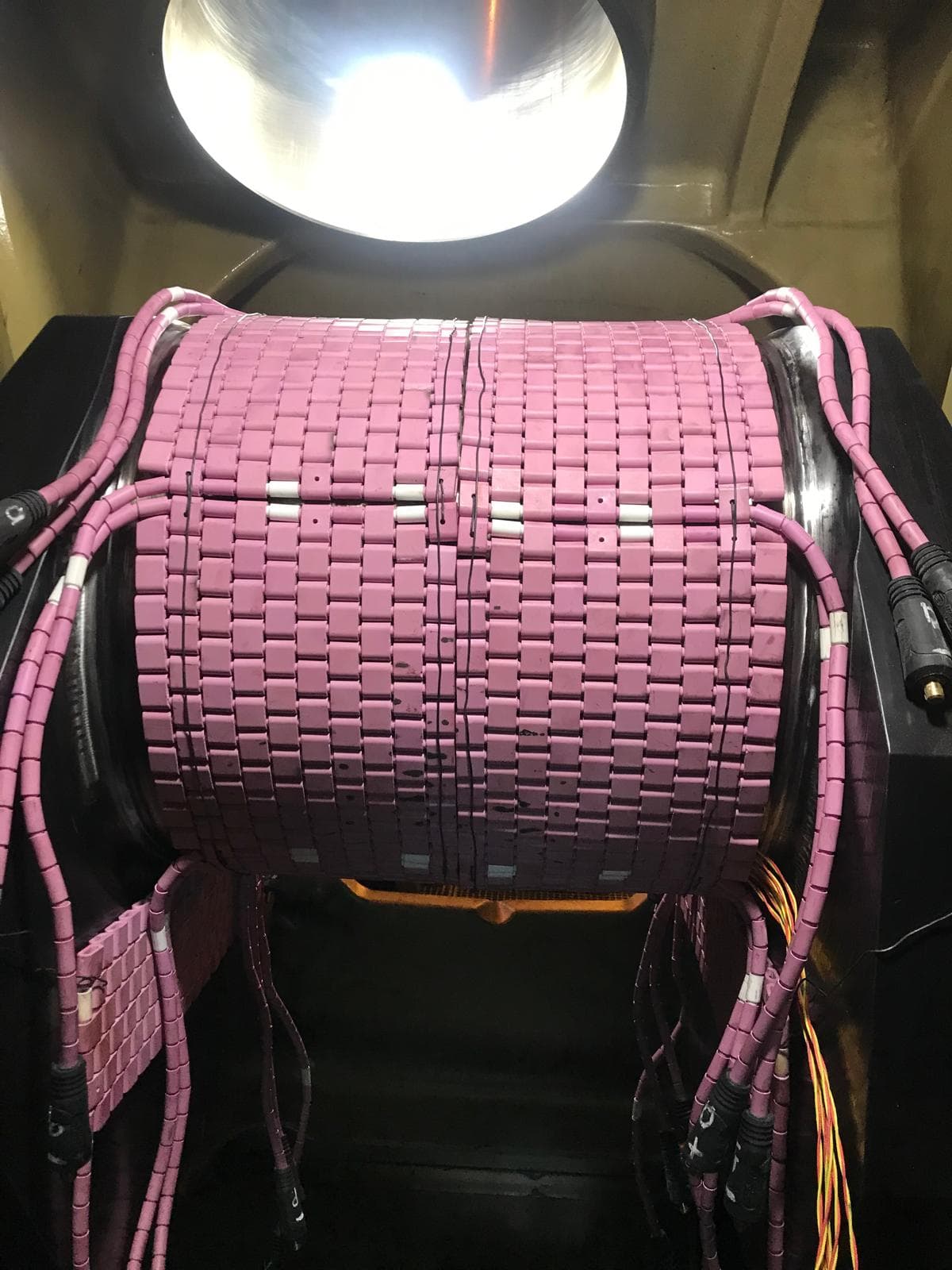
A seizure-hardened crankpin is brought down to a grindable hardness by controlled heating and cooling with resistance heaters, with the crankshaft in place.
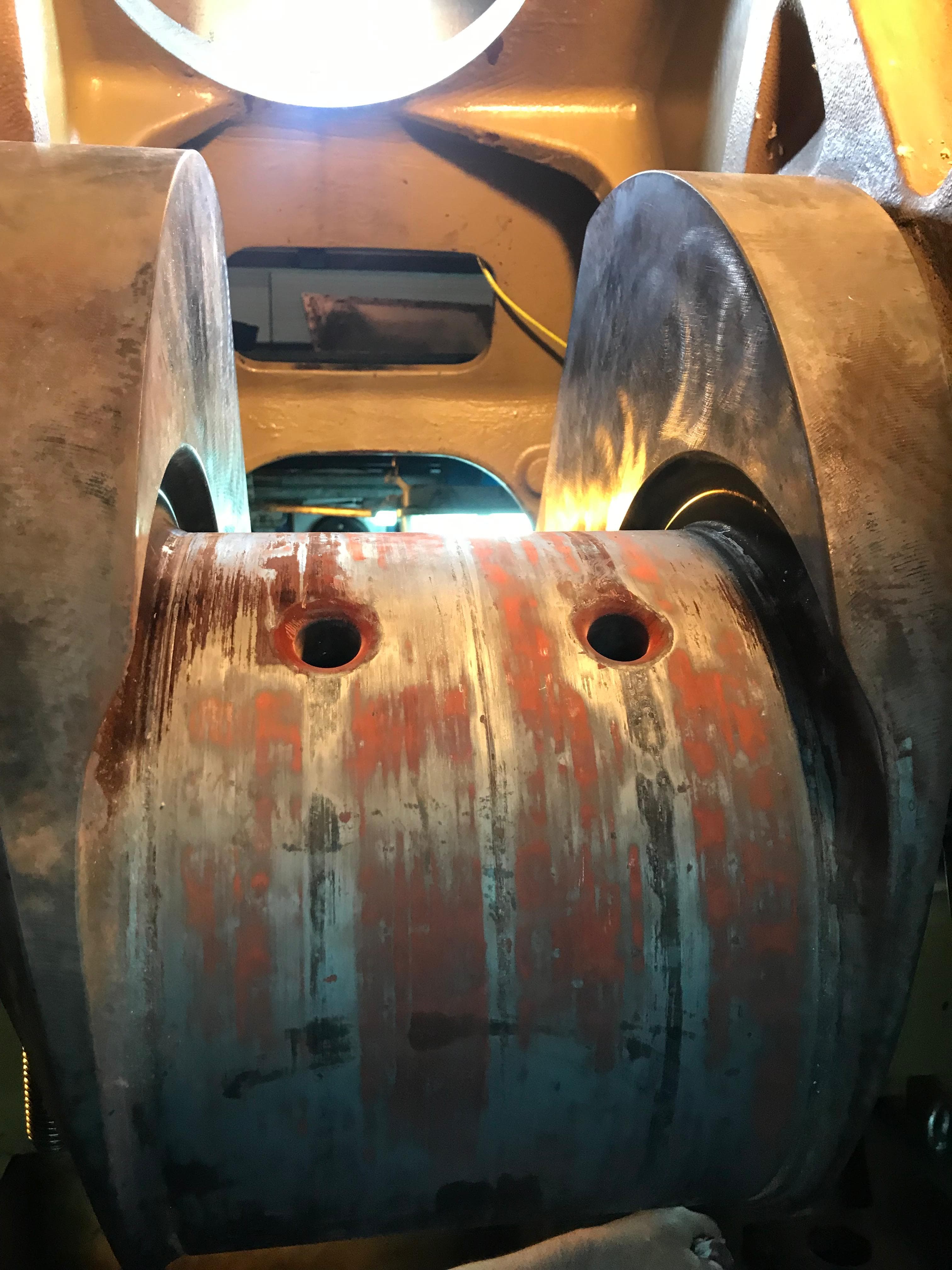
Frictional heat during a seizure hardens the pin surface. A hard surface is difficult to grind and more likely to crack; this treatment prepares the surface for grinding. The process is sometimes loosely called in-situ annealing.
Photos from the Job

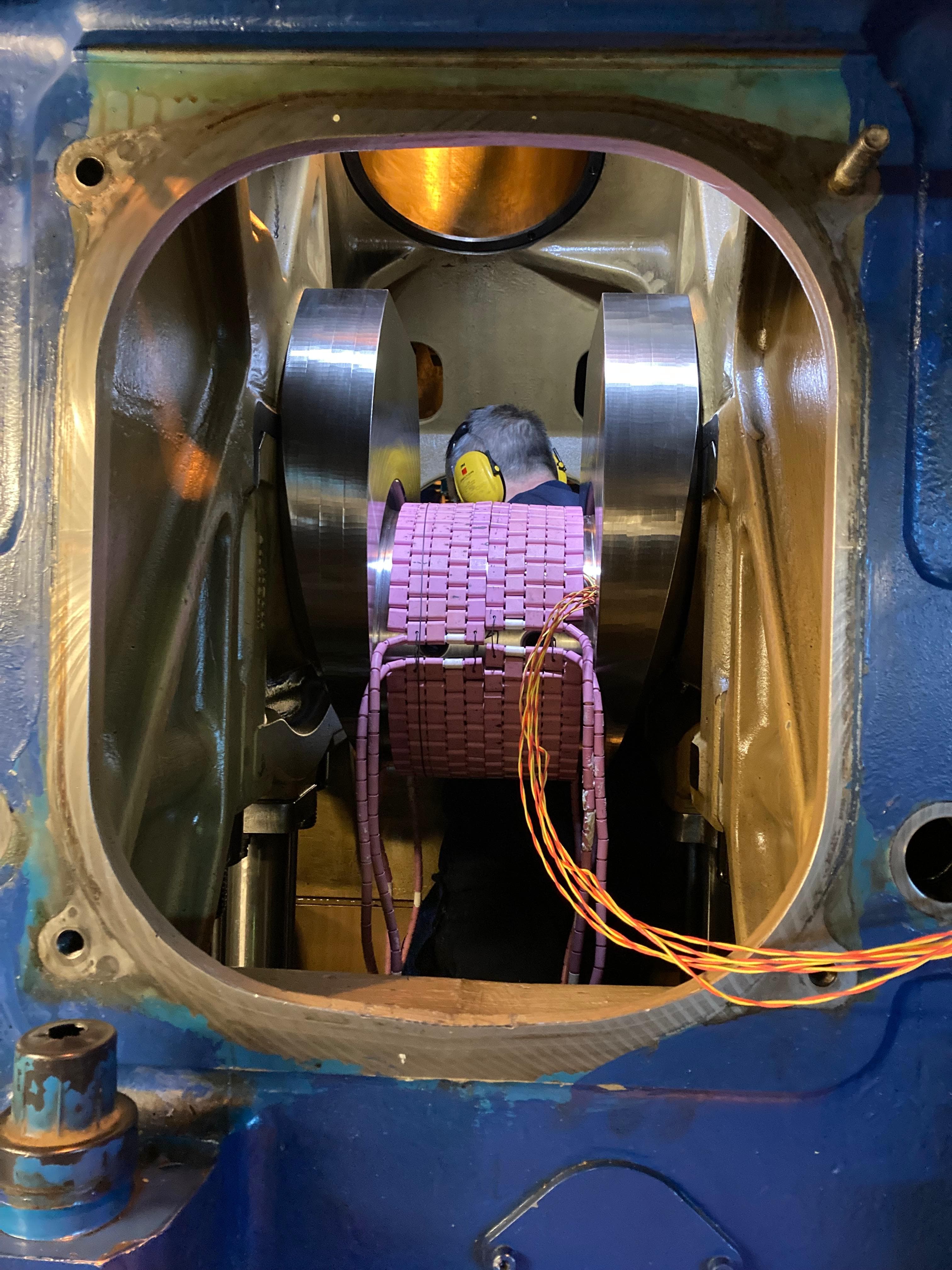
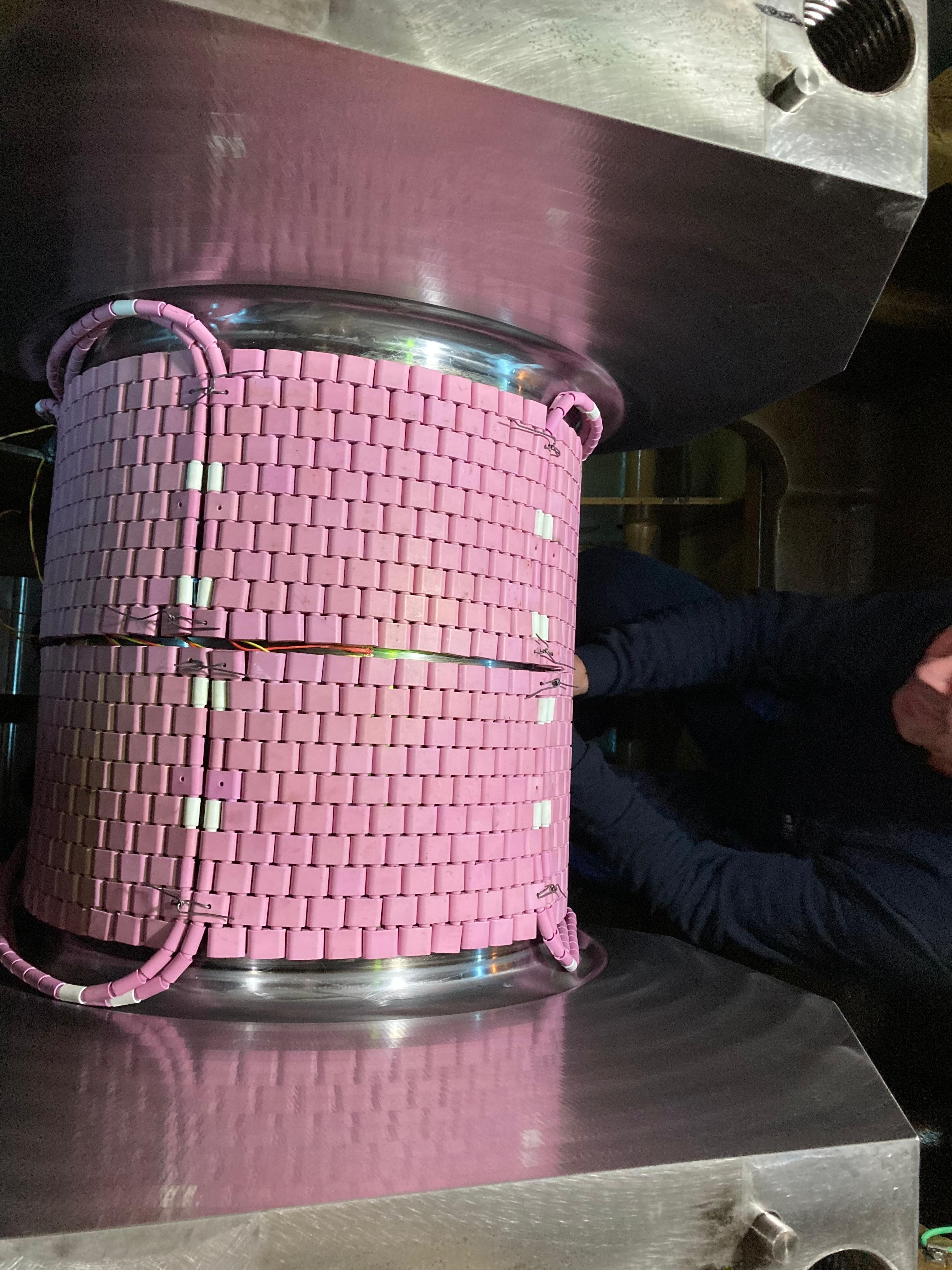
Process Steps
When It Is Needed
- When hardness measured after a seizure is above the engine maker's limit
- When the grinding stone stops cutting the hardened surface
- When grinding through the hard layer alone would remove far more material than the damage requires
Scope and Limits
- It neither removes cracks nor restores dimensions; grinding and polishing follow.
- Temperature and holding time are not a fixed recipe; they are set by the material and the hardness measured.
Frequently Asked Questions
Is stress relieving the same as annealing?
No. Annealing takes steel above its critical transformation temperature and cools it slowly, which is not done with the crankshaft in place. Stress relieving stays below that temperature: it softens the hard layer left by the seizure and removes residual stress.
Can the engine go back into service right after the treatment?
No. Stress relieving prepares the surface for grinding; grinding, polishing and final measurements follow.
Contact Us Now
Tell us the engine make and model, the damage and where the vessel is; we will review it and get back to you.
Request a QuoteOther Services
10 servicesOther reconditioning work we do on board and in the workshop.
- In-situ crankpin grinding
- Inspection and reporting
- Crankpin polishing
- Laser alignment check
- Cylinder liner honing
- Liner seating face grinding
- Crane seating face grinding
- Workshop machining
- Connecting rod crack testing
- Liner flange underside grinding