
In-situ Crankpin Grinding
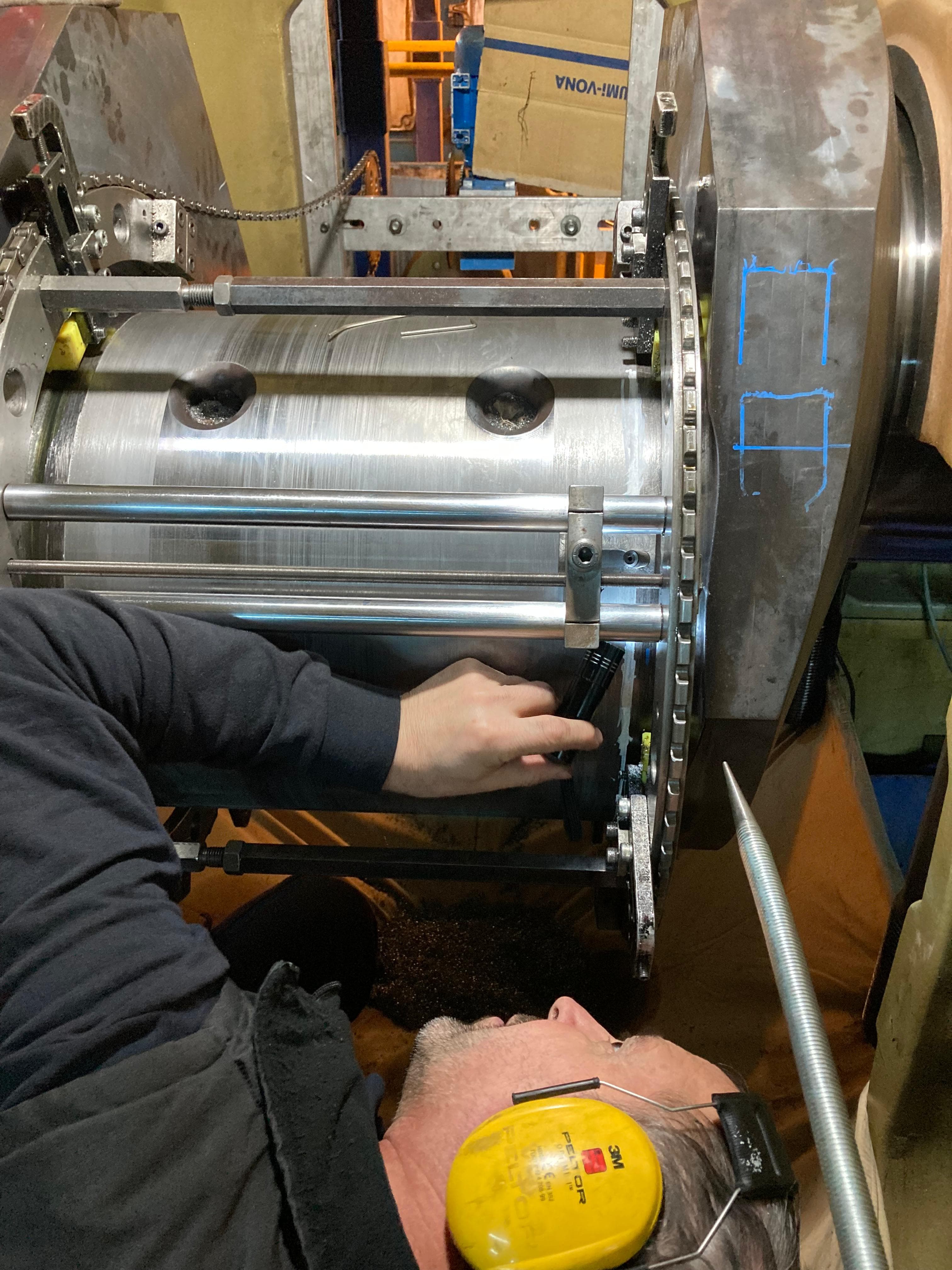
A damaged crankpin is ground to an undersize with a portable grinding machine and polished, without removing the crankshaft from the engine.
See the process steps
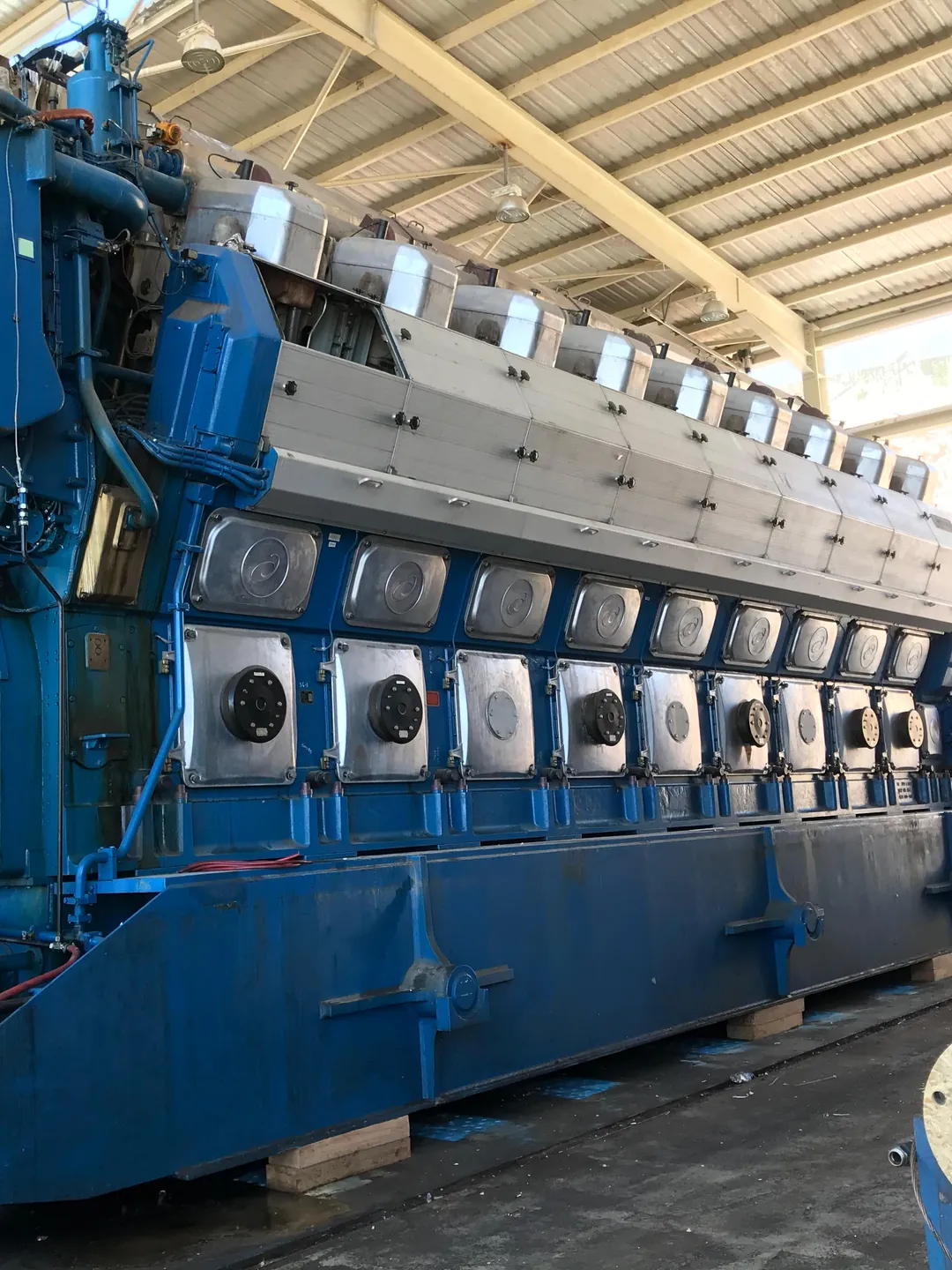
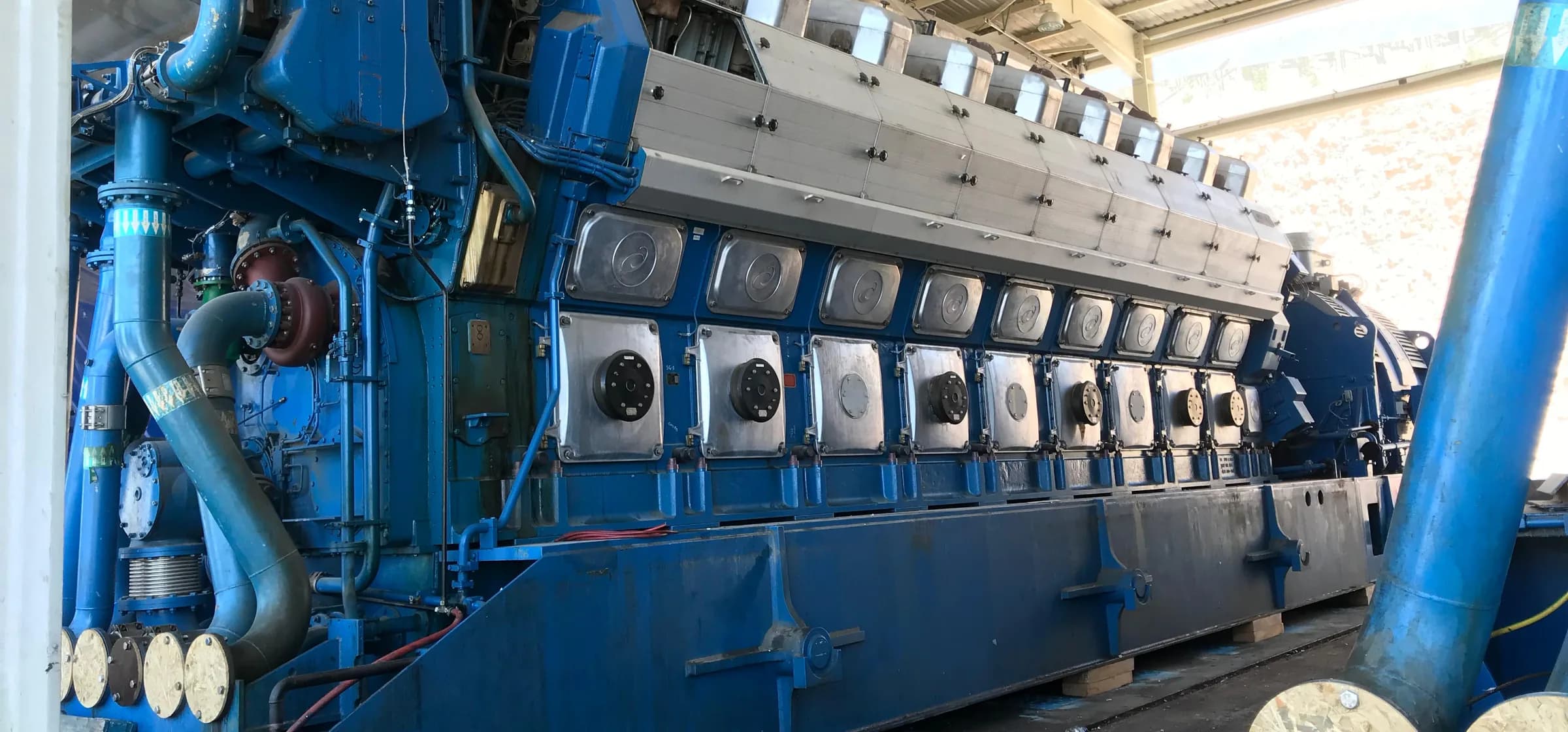
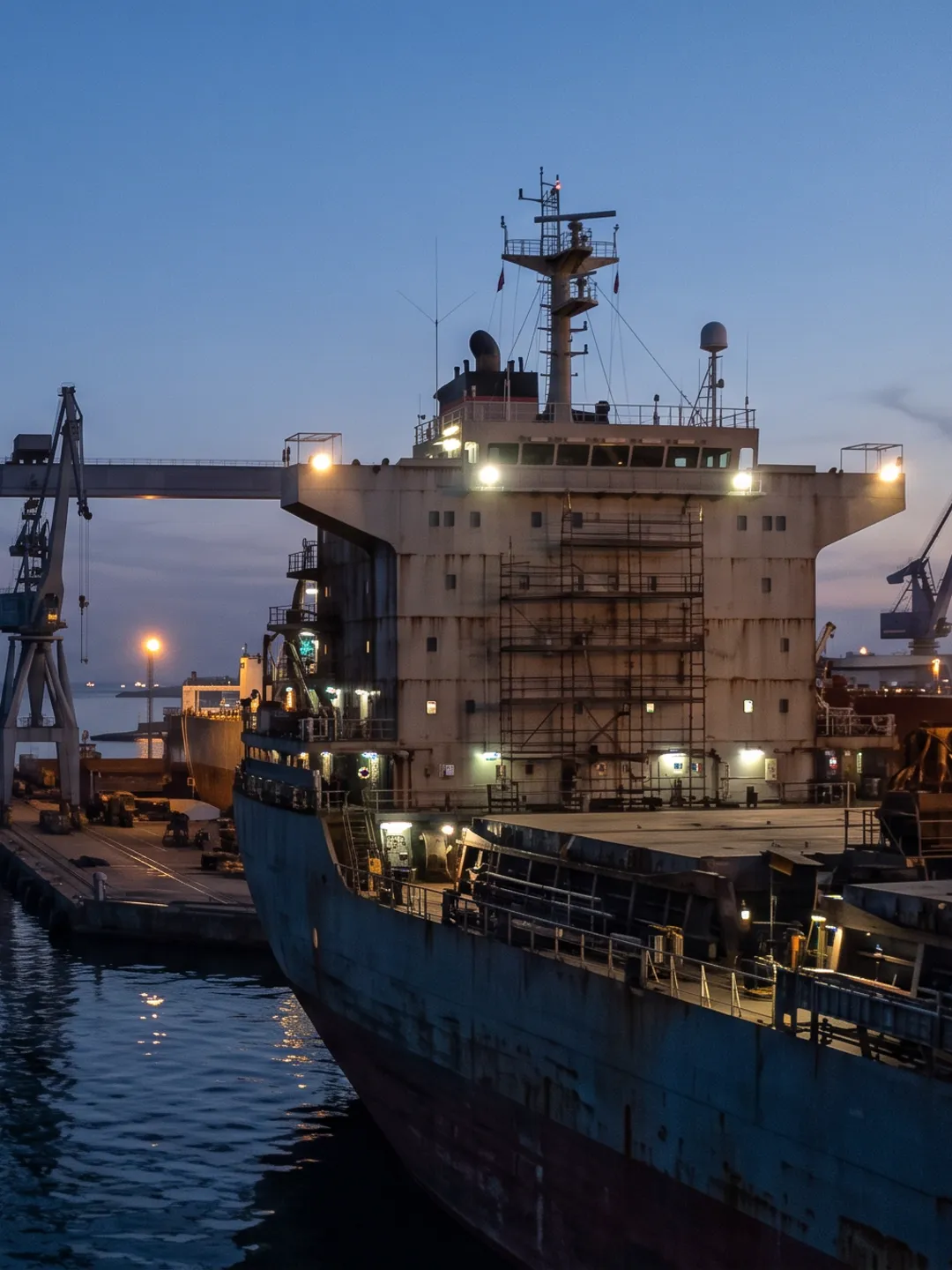
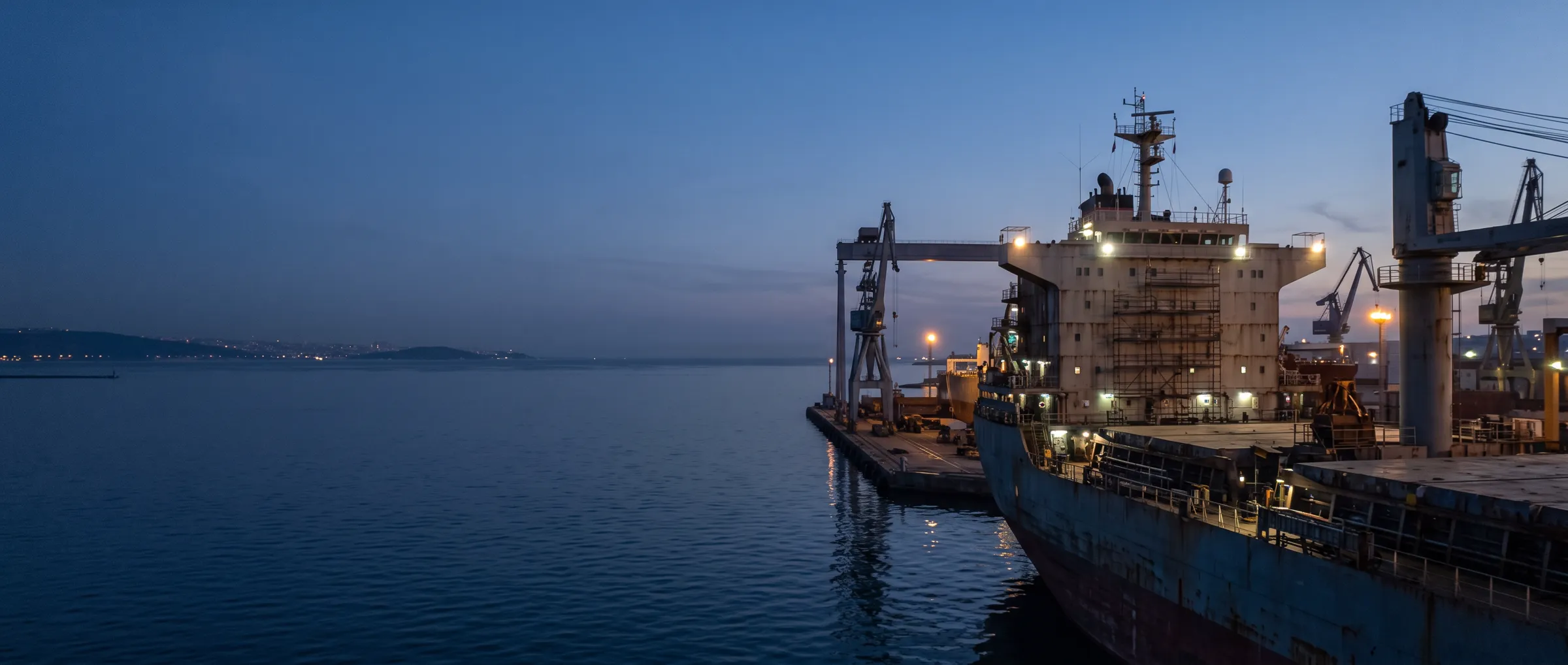
We work at the shipyard or port where the vessel is, without removing the crankshaft or the liner. Engine components are machined in our workshop in Tuzla.
Most of our work is done on board, without removing the part.
A summary of the work we do on board, with the engine left in place.
Macit Motor Yenileme is a marine engine reconditioning workshop in Tuzla, Istanbul, working on main and auxiliary engines. In-situ crankpin grinding and polishing without removing the crankshaft, cylinder liner honing with the liner in place, stress-relief heat treatment, dimensional inspection and crack detection are carried out at the shipyard or port where the vessel is; crankshafts and engine components are machined in our workshop in Tuzla.
We work with our founder's experience in the trade since 1995. Every job starts with measurement, and the dimensions are taken again and reported once the work is done.
About UsEach service page explains the steps of the job.
A damaged crankpin is ground to an undersize with a portable grinding machine and polished, without removing the crankshaft from the engine.
See the process steps
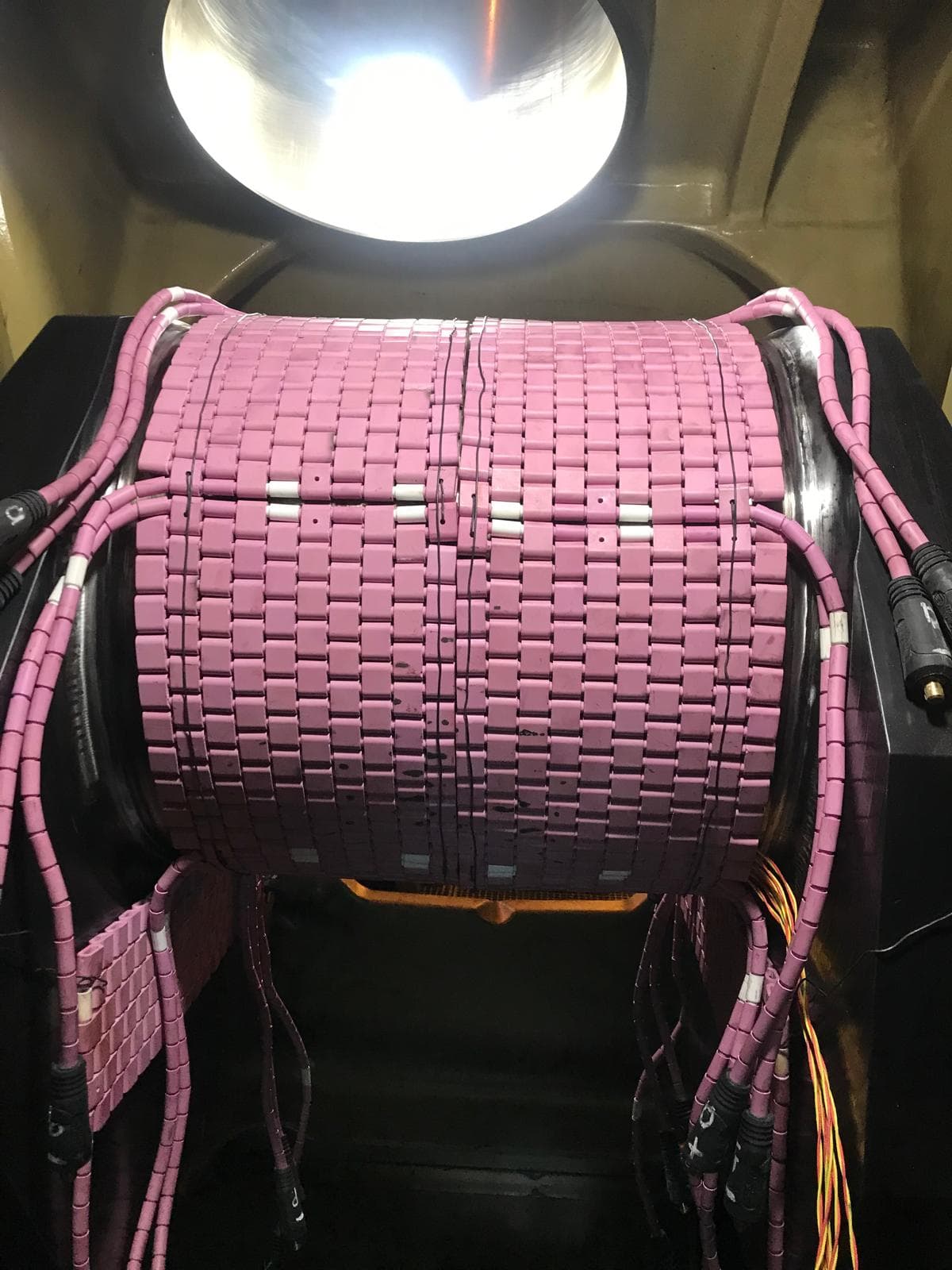
A seizure-hardened crankpin is brought down to a grindable hardness by controlled heating and cooling with resistance heaters, with the crankshaft in place.
See the process steps
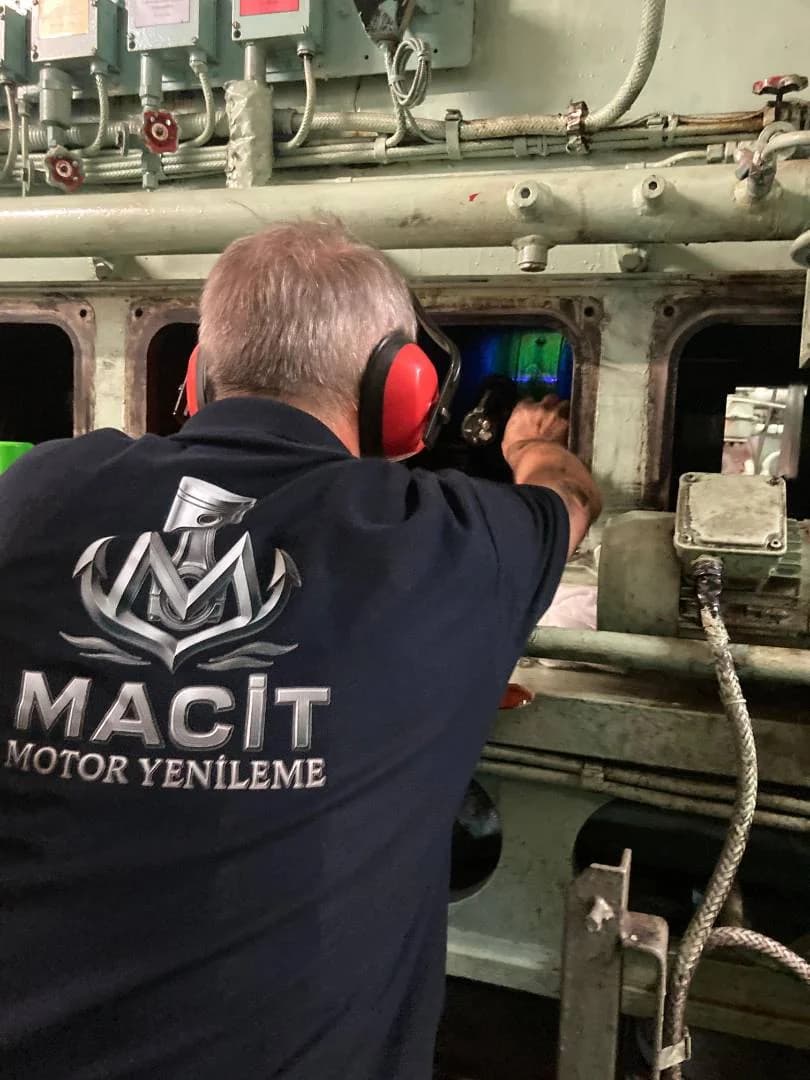
The crankshaft and related parts go through visual, dimensional, hardness and crack checks on board; findings are delivered in a written condition report.
See the process steps
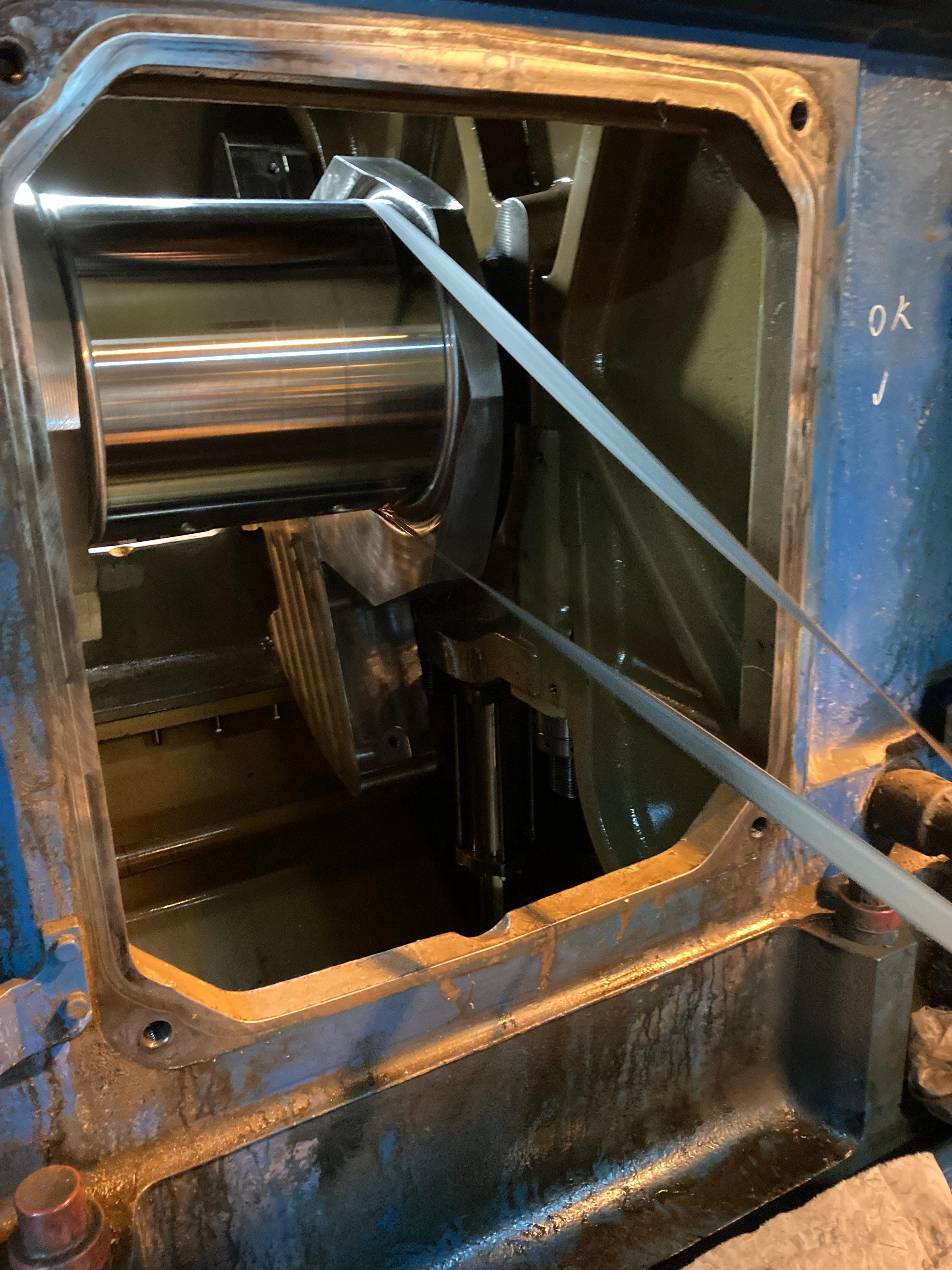
A crankpin that is within dimensional limits but lightly scored is polished on board with abrasive belts, without regrinding.
See the process steps
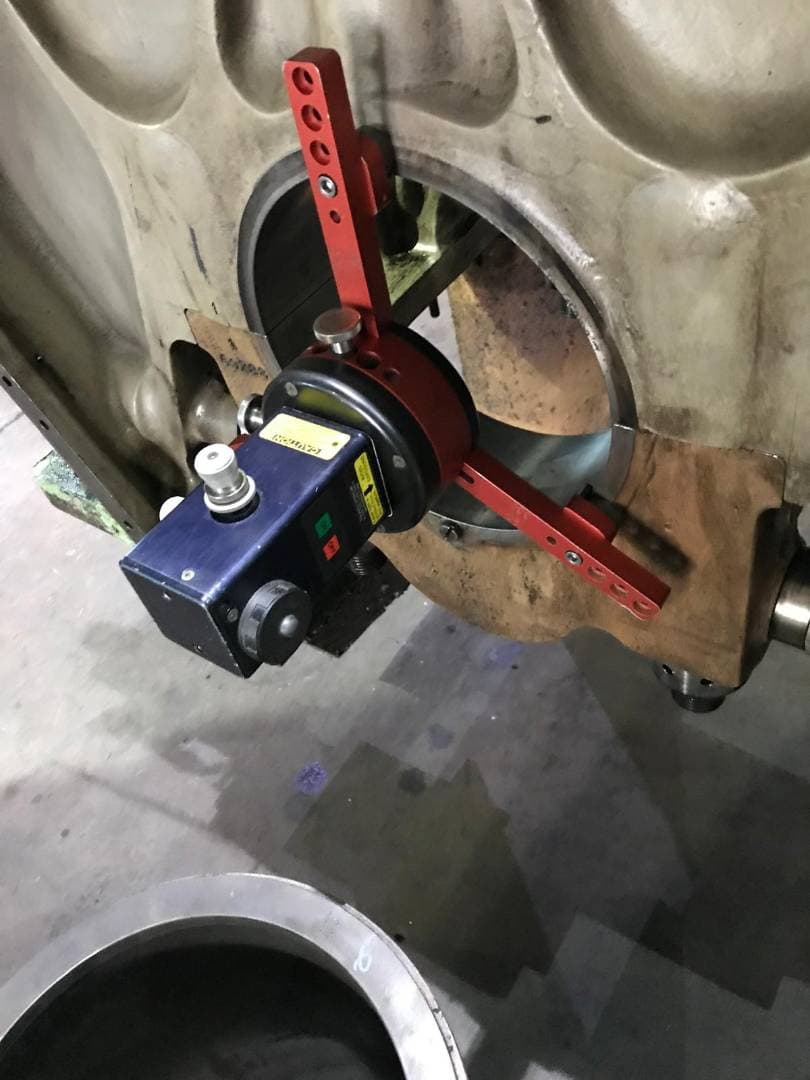
The deviation of points that should share one axis, such as main bearing housings, is measured on board against a laser reference line and reported.
See the process steps
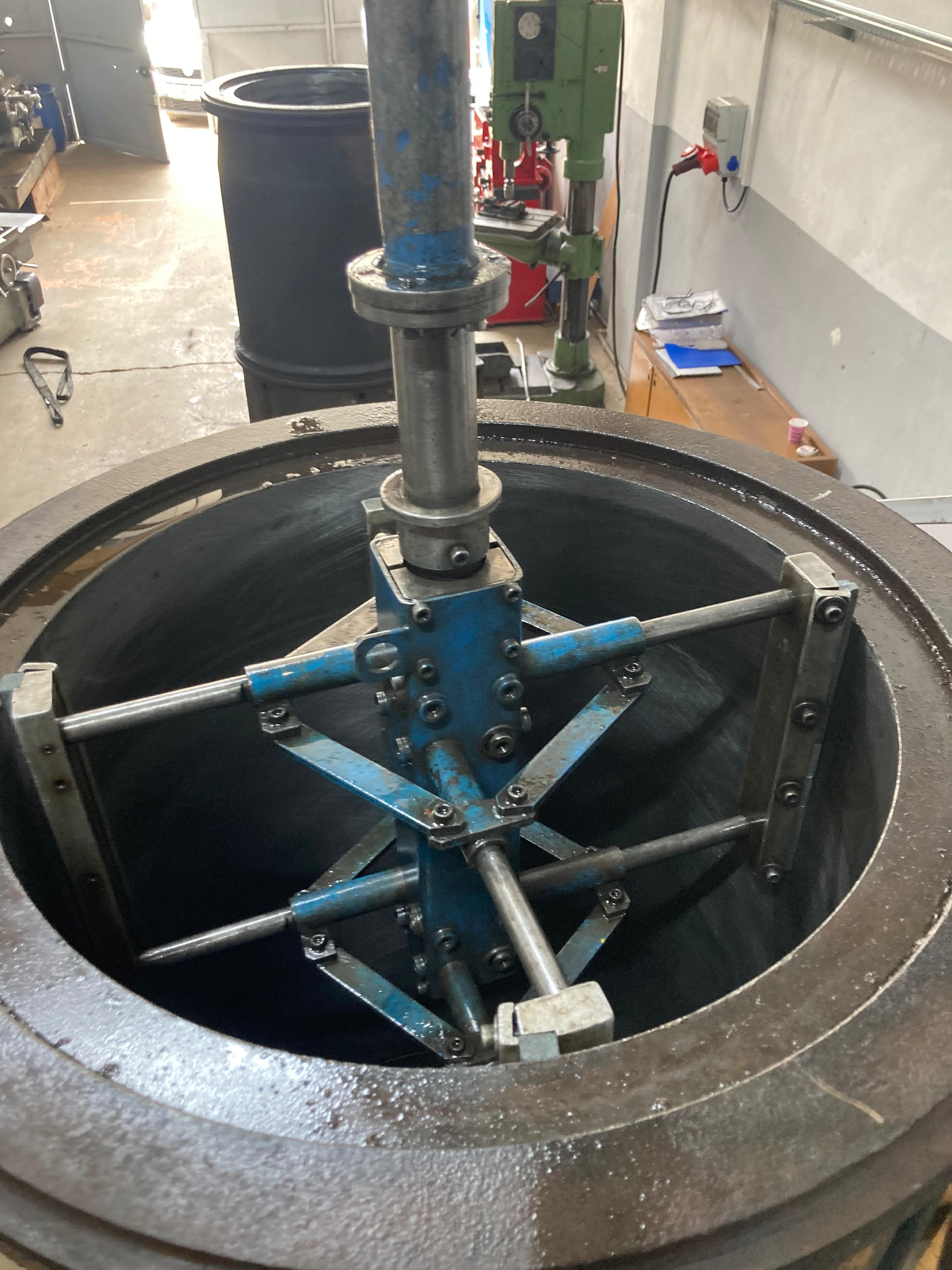
On board, with the liner in place: the glazed layer in the bore is removed with honing stones and the cross-hatch that holds oil for the piston rings is restored. It is not a dimensional correction.
See the process steps
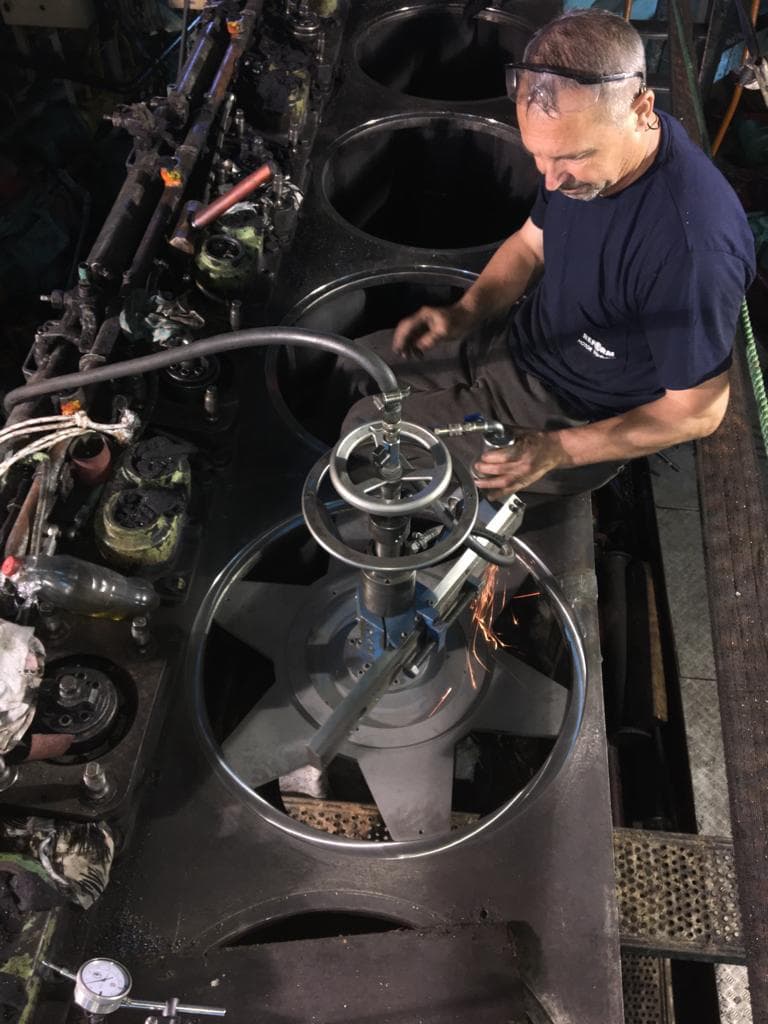
The flatness of the block face on which the cylinder liner seats, lost to wear, corrosion or pitting, is restored with a portable grinding rig without removing the block.
See the process steps
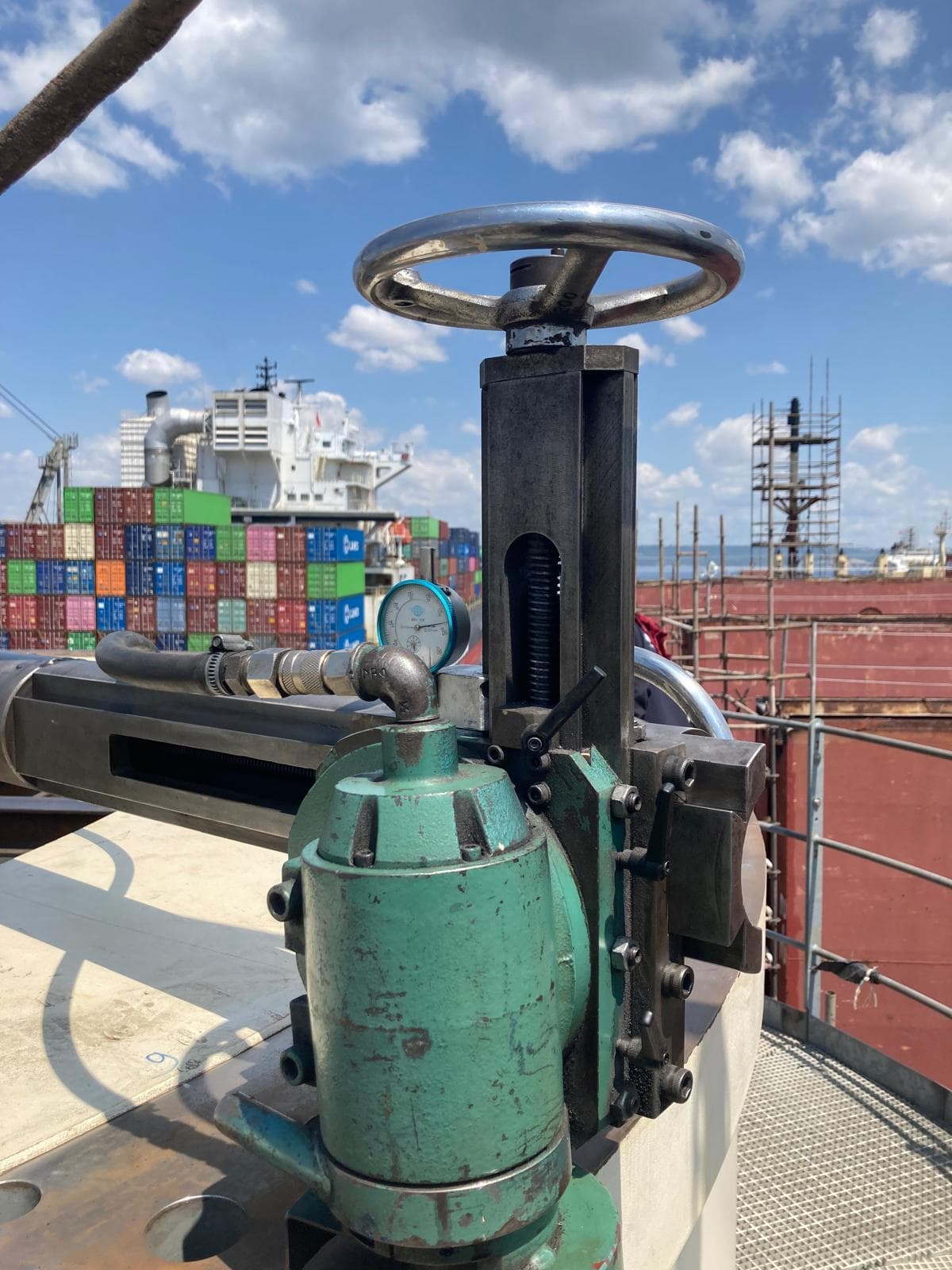
The flatness of the seating face that carries a ship crane's slewing bearing is restored on board with a portable grinding rig.
See the process steps
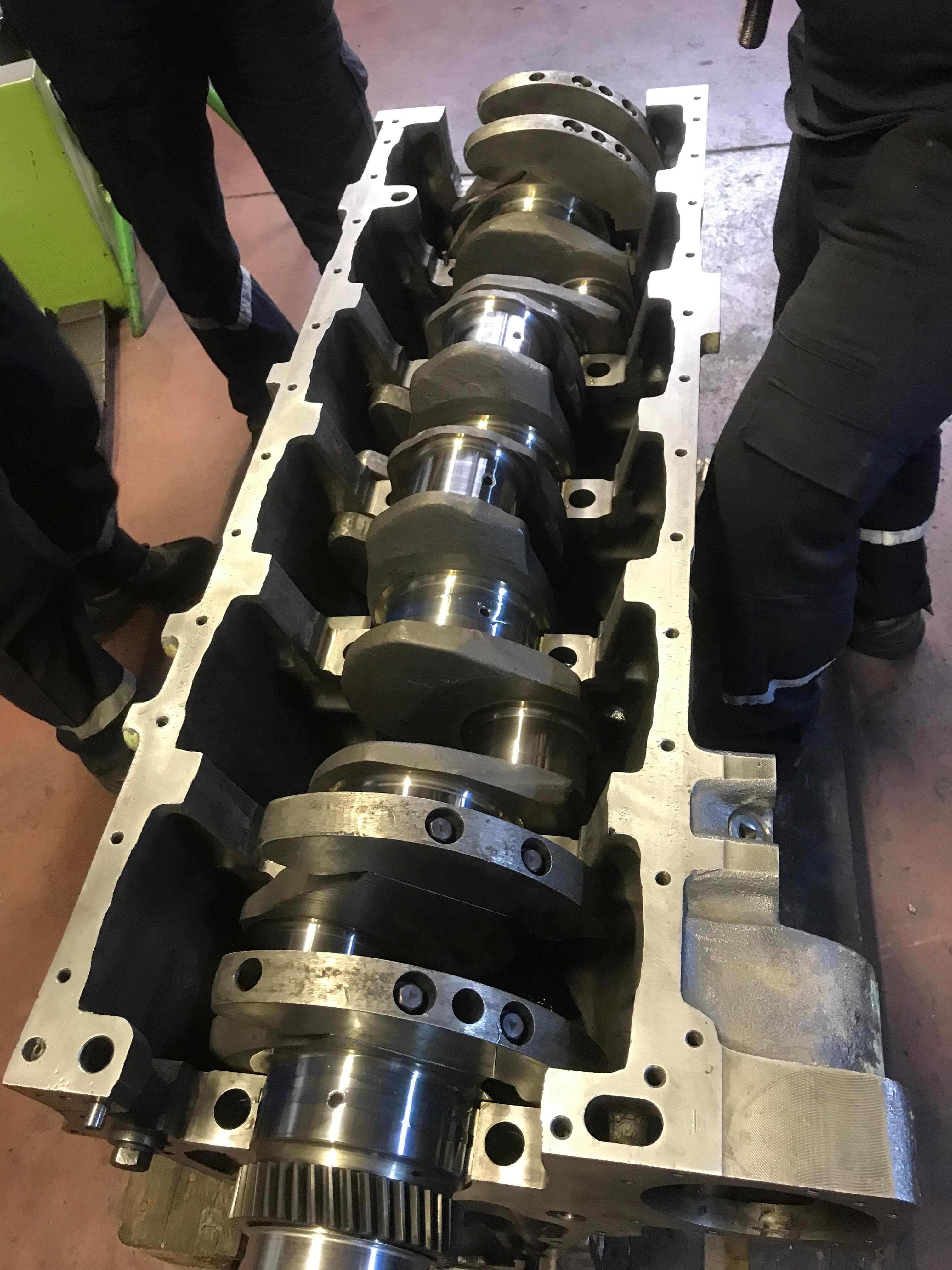
Diesel engine parts removed from the vessel and brought to our Tuzla workshop are measured, and worn surfaces are brought back to serviceable dimensions by grinding, honing and machining.
See the process steps
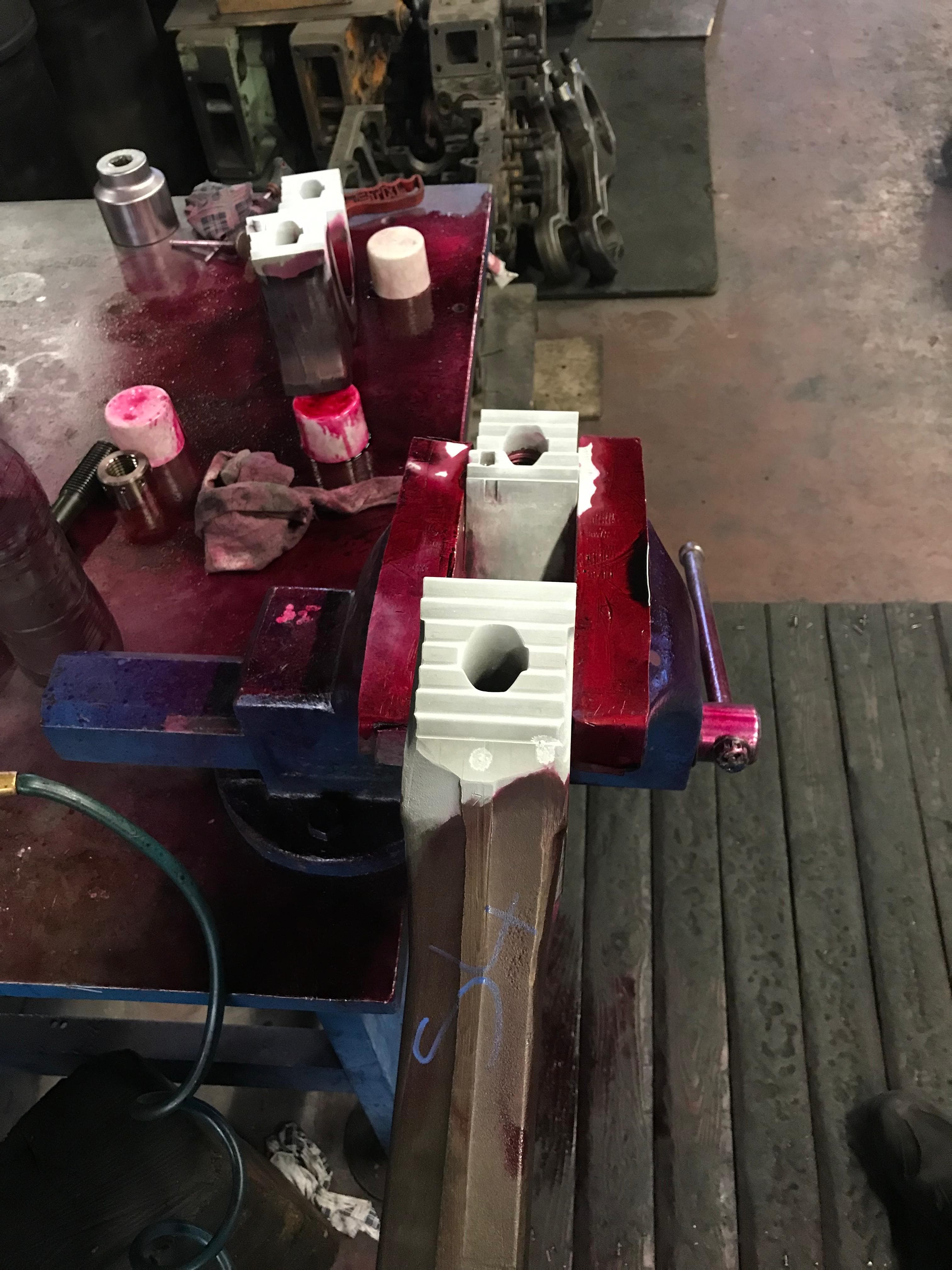
Surface cracks in connecting rods are searched for by liquid dye penetrant inspection and reported by location and length.
See the process steps
The flatness of the liner flange underside, the face with which the liner seats on the engine block, lost to wear, corrosion or pitting, is restored by grinding.
See the process steps
Call us or use the quote form: tell us the engine make and model, the damage and where the vessel is, and attach photos if you have them.
Dimensions are taken before any work starts; hardness is measured and cracks are checked where needed. The scope of the job is set by these readings.
Grinding, polishing, honing or heat treatment, on board with mobile equipment or in our workshop.
When the work is done the dimensions are taken again and the results are reported.
Reconditioning work on marine main and auxiliary engines: in-situ crankpin grinding and polishing, stress-relief heat treatment, cylinder liner honing, grinding of liner and crane seating faces, laser alignment checks, dimensional inspection and crack detection on board; crankshaft and engine component machining in the workshop.
Yes. The grinding machine is mounted on the pin; the pin stays still and the machine rotates around it. Before grinding, the pin is checked for cracks and its hardness is measured; after grinding it is polished.
No. Honing is a surface process: it removes the glazed layer and restores the cross-hatch that holds oil for the piston rings. A liner with ovality or taper beyond limits must be replaced. On board, honing is done with the liner in place and the machine set up on top of the engine.
Both. Crankpin grinding, polishing, stress relieving, honing and measurement are done with mobile equipment at the shipyard or port where the vessel is. Crankshafts and engine parts that are removed and brought to us are machined in our workshop in Tuzla.
No. We do not sell spare parts or engines and we do not overhaul turbochargers. Parts such as bearings and liners are supplied by the owner or the agent; we carry out the workmanship.
The engine make and model, what the damage is, the vessel name or IMO number, the port or shipyard where it is, and the preferred date. Photos or a measurement report can be attached to the quote form.
It depends on the engine type and the damage. The duration becomes clear once measurements are taken and the scope of the job is defined.
Tell us about the engine, the damage and where the vessel is; we will review it and get back to you.