In-situ Crankpin Polishing
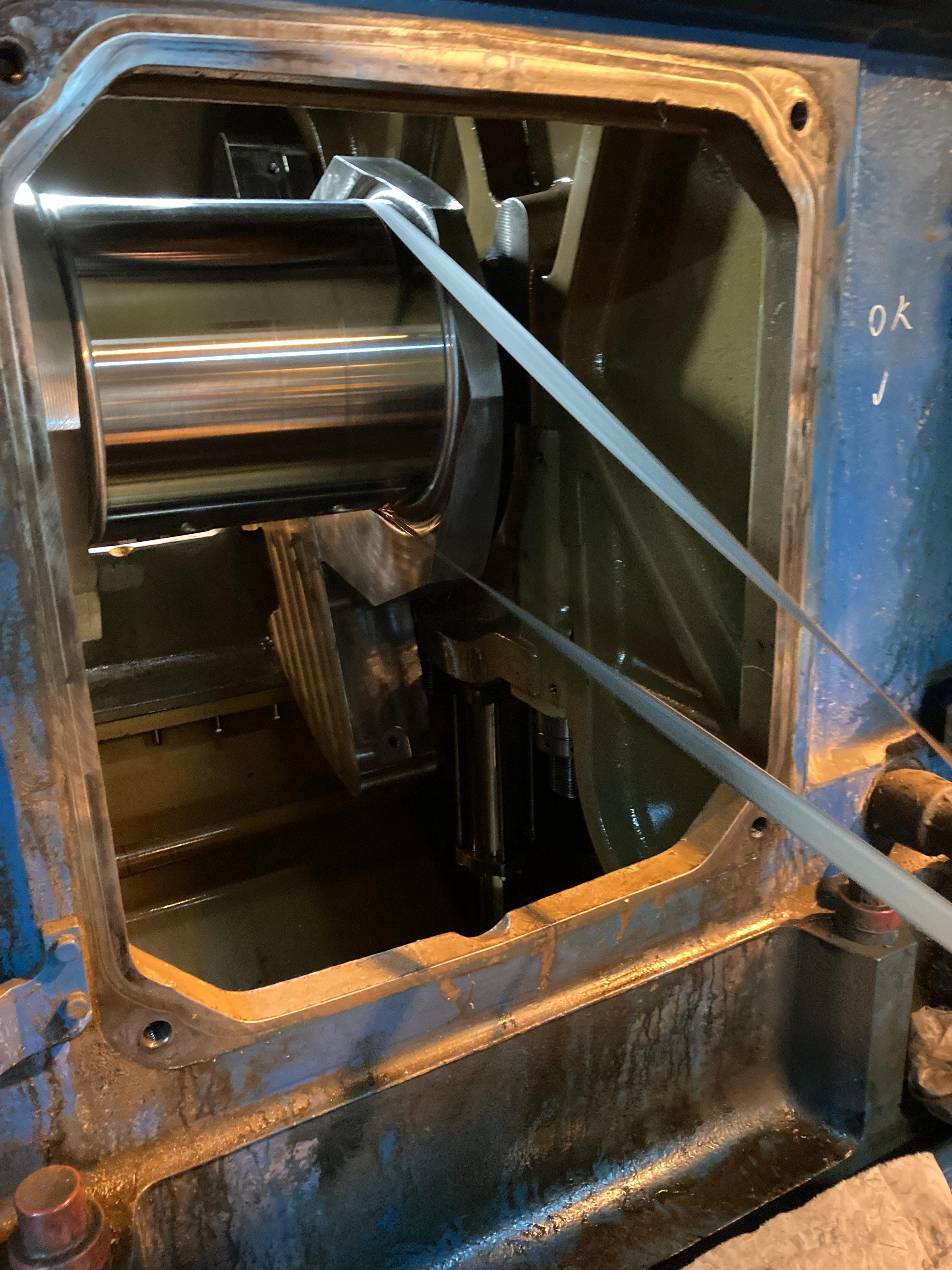
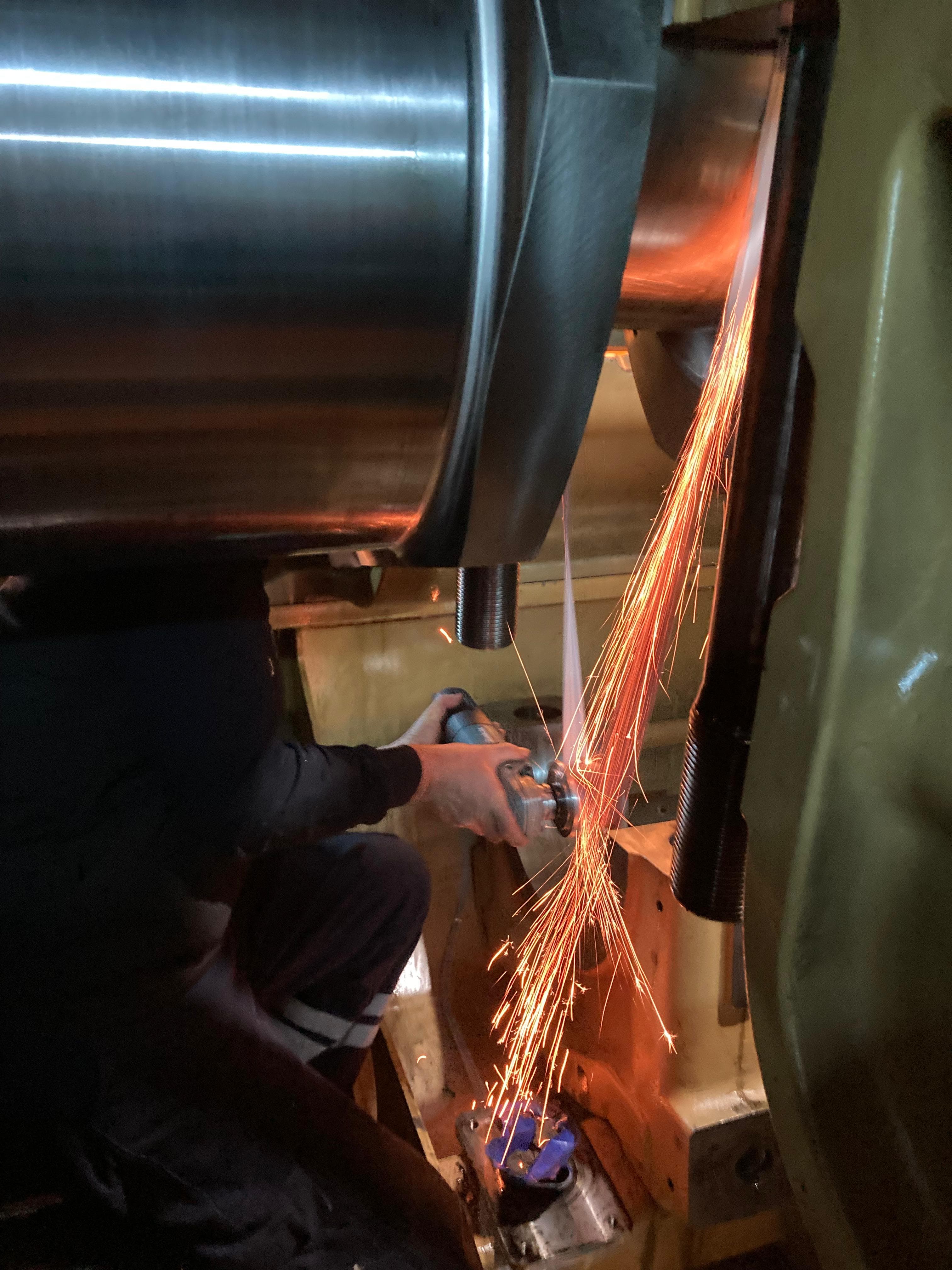
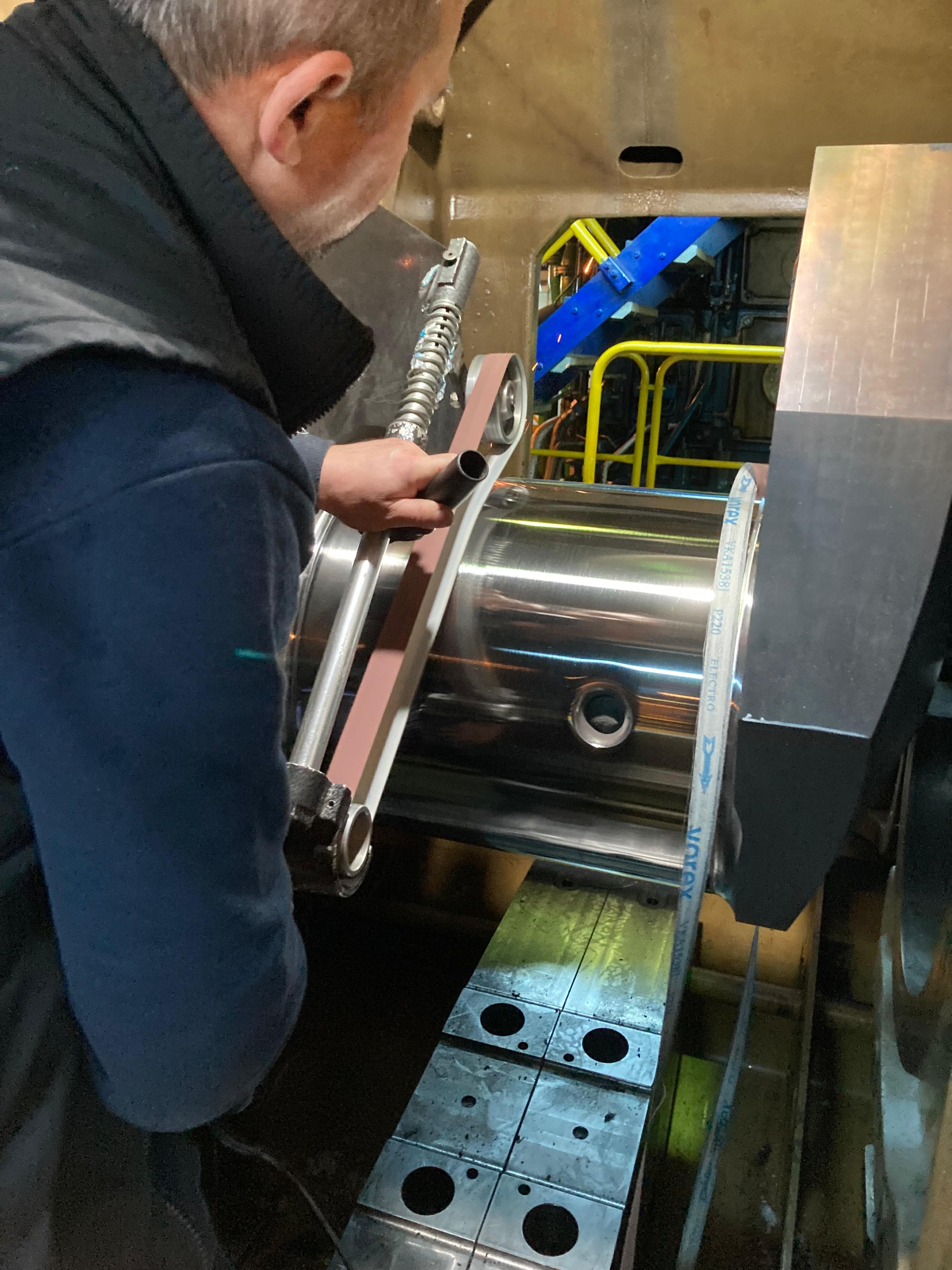
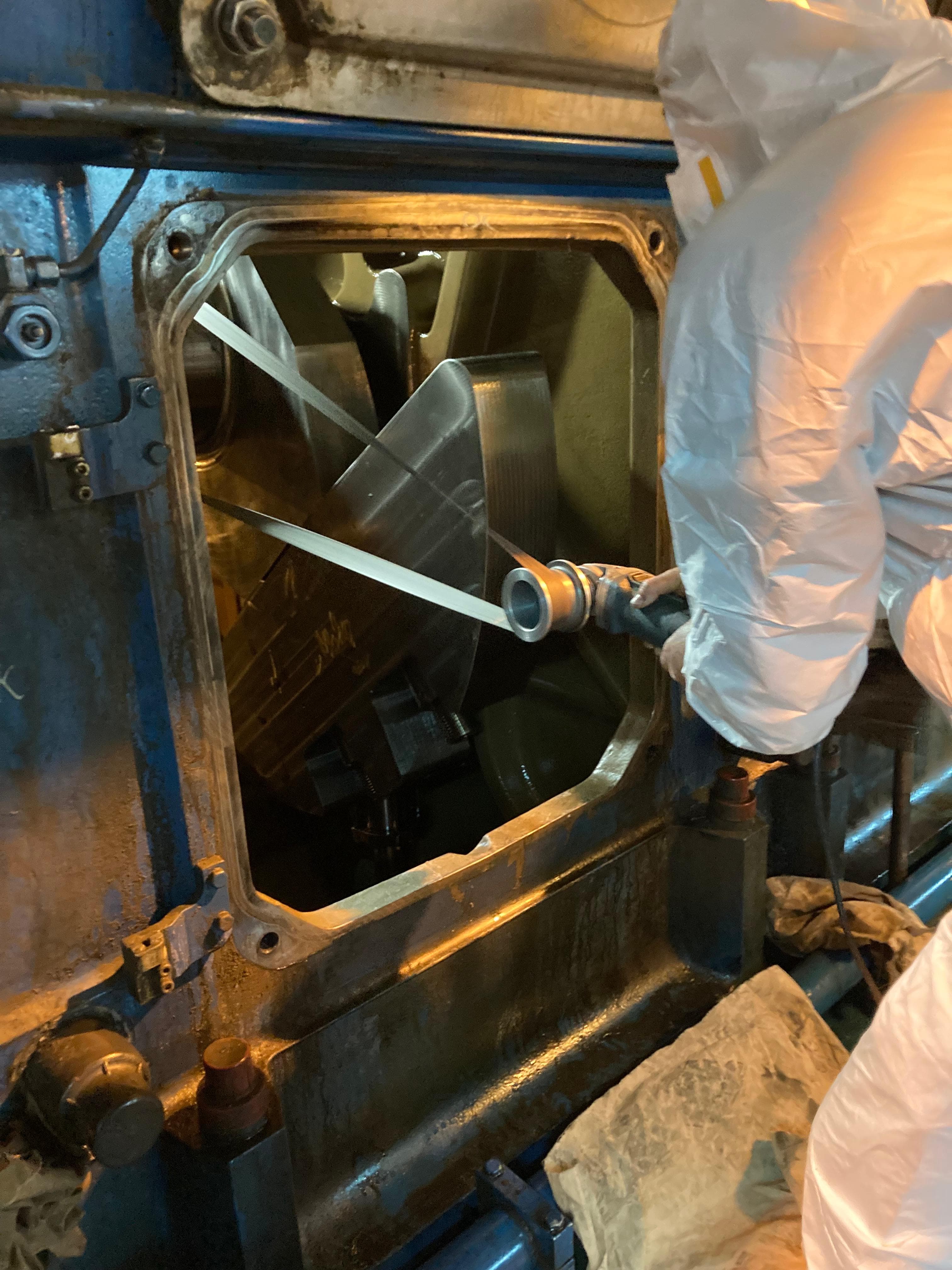
A crankpin that is within dimensional limits but lightly scored is polished on board with abrasive belts, without regrinding.
Polishing is not a substitute for grinding: it leaves the diameter practically unchanged and only restores the surface.
Photos from the Job

Process Steps
When It Is Needed
- When light bearing contact has left superficial scratches
- When particles in the lube oil have marked the pin
- When surface roughness has deteriorated
- As the finishing step after grinding
Scope and Limits
- Polishing does not correct ovality or taper and does not remove deep scoring.
- If diameter, ovality or taper is out of limits, or the scoring does not clean up, the pin needs grinding.
Frequently Asked Questions
Do we need a new bearing after polishing?
Polishing leaves the diameter practically unchanged, so no undersize bearing is needed. Whether the existing shell can be reused depends on its condition and the engine maker's instructions.
How do you tell that polishing will not be enough?
We measure before starting. If the dimensions are out of limits, or scoring remains after polishing, we recommend grinding.
Contact Us Now
Tell us the engine make and model, the damage and where the vessel is; we will review it and get back to you.
Request a QuoteOther Services
10 servicesOther reconditioning work we do on board and in the workshop.
- In-situ crankpin grinding
- Stress relieving (heat treatment)
- Inspection and reporting
- Laser alignment check
- Cylinder liner honing
- Liner seating face grinding
- Crane seating face grinding
- Workshop machining
- Connecting rod crack testing
- Liner flange underside grinding